
Experiencing pain or sensitivity after a dental filling? Learn why this happens, which symptoms are normal, when to be concerned, and how Worldwide Dental Hospital in Vietnam provides advanced restorative care for fast, comfortable healing.
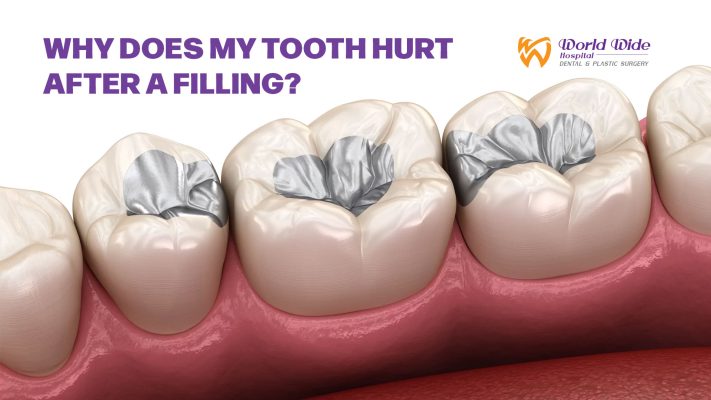
UNDERSTANDING PAIN AFTER A TOOTH FILLING
Getting a dental filling is one of the most common dental treatments. It removes decay and restores the tooth’s structure. Many patients expect the discomfort to disappear immediately after the procedure, so it can be worrying when the tooth still feels sensitive or painful afterward.
However, mild to moderate discomfort after a filling is very normal, especially in the first few days. The tooth needs time to recover from drilling, decay removal, and contact with dental materials. In some cases, sensitivity can last for one to two weeks, depending on the depth of the cavity and the tooth’s condition before treatment.
At Worldwide Dental Hospital, dentists often explain that a filling is not simply “plugging a hole”—it involves treating living tissues inside the tooth. The dental nerve may react temporarily, but this reaction usually improves naturally.
HOW LONG DOES PAIN AFTER A FILLING USUALLY LAST?
The duration varies depending on the tooth, the complexity of the cavity, and the materials used.
● First 1–3 days
You may feel mild sensitivity to cold, hot, or pressure.
● 1 week
Most discomfort should noticeably decrease. You may still feel some tenderness while chewing.
● 2 weeks
Mild sensitivity may continue if the cavity was deep or close to the nerve.
● Beyond 3 weeks
If pain persists, worsens, or feels sharp, a follow-up exam is important.
Worldwide Dental Hospital schedules follow-up checks when needed to ensure proper healing.
COMMON REASONS FOR PAIN AFTER A DENTAL FILLING
INFLAMMATION OF THE DENTAL NERVE (PULPAL IRRITATION)
When a cavity is removed, the drill and the heat it generates may irritate the dental nerve inside the tooth. Even though modern tools minimize heat and vibration, the nerve can still become sensitive.
If the cavity is deep, the nerve may feel “inflamed” or irritated, resulting in temporary pain when eating, drinking cold beverages, or touching the tooth.
This type of sensitivity is normal and improves as the nerve heals. It does not indicate that the filling was done incorrectly. It is simply the tooth’s natural response to treatment.

THE FILLING IS TOO HIGH AND AFFECTS YOUR BITE
Sometimes the filling sits a little higher than the surrounding tooth surface. Even a slight difference of 0.1 mm can cause discomfort because the tooth will take extra pressure when chewing.
When the bite is uneven, the ligament around the tooth becomes stressed, causing:
- Pain when biting down
- A feeling that the tooth is “taller”
- Sudden sharp discomfort when chewing
If this is the cause, the solution is simple: the dentist adjusts the filling’s height. Once corrected, discomfort typically disappears almost immediately.
Worldwide Dental Hospital always performs precise bite checks after restorations, but swelling or numbness after treatment can make it hard for the patient to feel the bite accurately, so adjustments may be needed later.
THE CAVITY WAS VERY DEEP OR CLOSE TO THE NERVE
If decay reaches close to the dental pulp, the nerve becomes more reactive. Even after removing the decay and placing the filling, the nerve may still be irritated because it was previously infected or stressed.
Deep fillings often cause:
- Sensitivity to cold air or drinks
- Mild spontaneous throbbing
- Sensitivity when chewing
This can last several days to a few weeks. In many cases, the nerve heals completely. However, if the nerve was already weak or inflamed before treatment, it may require additional care such as a protective lining or (rarely) root canal therapy.
Worldwide Dental Hospital uses digital X-rays to evaluate the depth of cavities and choose the safest approach.
TEMPERATURE SENSITIVITY CAUSED BY THE FILLING MATERIAL
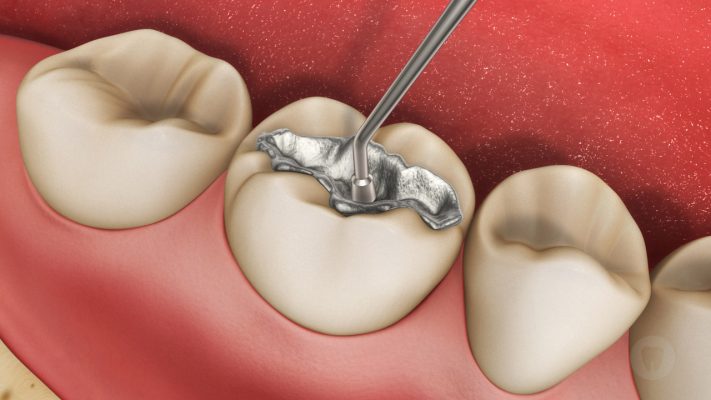
Composite resin (tooth-colored filling material) expands and contracts slightly with temperature changes. When placed near the nerve, these small movements can trigger temporary sensitivity.
Additionally, the bonding process involves adhesives that may momentarily irritate the dentin.
This sensitivity usually fades as the tooth adapts to the new material.
GUM INFLAMMATION AROUND THE TREATED TOOTH
During cavity preparation, the gum tissue near the filling may become irritated from:
- Dental instruments
- Isolation materials
- Cleaning solutions
- Restorative techniques
Inflamed gums can feel sore when brushing or chewing, and the discomfort may feel like tooth pain.
This type of discomfort responds well to warm saltwater rinses and gentle brushing.
MICRO-LEAKAGE OR GAPS BETWEEN THE TOOTH AND THE FILLING
If a tiny margin or gap forms between the tooth and the filling, hot, cold, or sweet stimuli may seep into the space and irritate the nerve.
Micro-leakage may occur if:
- The cavity was deep or irregular
- The tooth was difficult to isolate
- The filling material shrank slightly while hardening
If sensitivity progressively worsens instead of improving, the filling may need adjustment or replacement.
Worldwide Dental Hospital uses rubber dam isolation and advanced bonding techniques to ensure optimal sealing.

HOW TO KNOW IF YOUR PAIN IS NORMAL OR A SIGN OF A PROBLEM
Not all post-filling pain is concerning. Understanding what is normal versus abnormal helps patients feel more confident.
✔️ NORMAL DISCOMFORT
These sensations usually improve within days:
- Mild sensitivity to cold
- Tenderness when biting
- A slight ache that fades each day
- Temporary gum soreness
- Sensitivity triggered only by temperature changes
This indicates healthy healing.
❌ SIGNS THAT SOMETHING MAY BE WRONG
Seek a follow-up appointment if you experience:
- Pain that gets worse over time
- Sharp or stabbing pain when chewing
- Constant spontaneous throbbing
- Sensitivity lasting longer than three weeks
- A feeling that the filling is too high
- Pain that spreads to the jaw or ear
- Swelling or fever
These symptoms may indicate a high filling, nerve inflammation, or micro-leakage that needs correction.
Worldwide Dental Hospital provides follow-up evaluation and advanced imaging if needed.
HOW WORLDWIDE DENTAL HOSPITAL ENSURES COMFORTABLE AND SUCCESSFUL FILLINGS
International patients choose Worldwide Dental Hospital because of its precision, modern techniques, and gentle approach.
Advanced Digital Diagnosis
Digital X-rays and intraoral cameras allow dentists to see decay clearly and plan treatment accurately.
Modern Rotary Instruments
Minimize heat and vibration, reducing nerve irritation.
Rubber Dam Isolation
Keeps the tooth dry, ensuring the strongest bond and reducing the risk of micro-leakage.
High-Quality Composite Materials
Worldwide Dental Hospital uses top-grade, biocompatible composite that closely matches natural enamel and reduces temperature sensitivity.
Careful Bite Adjustment
Ensures the filling fits perfectly with the rest of the teeth, preventing pressure-related pain.
English-Speaking Dentists
Allow expats to understand every step of their treatment clearly.
HOME CARE TIPS TO REDUCE POST-FILLING SENSITIVITY
You can support your tooth’s recovery with simple at-home care recommended by Worldwide Dental Hospital:
Avoid very hot or cold foods temporarily
Give the tooth time to adjust.
Chew on the opposite side for the first few days
Prevents extra pressure on the treated tooth.
Use a soft toothbrush and a gentle brushing technique
Protects irritated gums.
Avoid hard, sticky, or chewy foods
These can stress the filling or trigger sensitivity.
Take mild pain relievers if needed
Ibuprofen or acetaminophen can help reduce inflammation.
Use a desensitizing toothpaste
Ingredients like potassium nitrate help calm nerve sensitivity.
Return for follow-up if symptoms do not improve
Ongoing discomfort may indicate a bite issue or deeper inflammation.

WHY EXPATS TRUST WORLDWIDE DENTAL HOSPITAL FOR RESTORATIVE TREATMENTS
Worldwide Dental Hospital is recognized for providing international-standard dental care to thousands of foreigners living in or visiting Vietnam.
English-fluent doctors
Clear communication throughout every step.
Hospital-grade sterilization
Ensures safe and hygienic treatments following European standards.
Modern technology
Including digital X-rays, CBCT, intraoral scanners, and high-quality bonding systems.
Convenient District 1 location
Easily accessible for expats working or living in the city center.
Transparent pricing
No hidden fees; clear explanation of treatment options.
Fast appointments and a comfortable experience
Appointments are efficient, gentle, and designed to minimize discomfort.
CONCLUSION
Pain after a dental filling is common and usually temporary. The dental nerve needs time to adapt after decay removal, drilling, and placement of new materials. Most discomfort fades within days, especially when the cavity was not too deep.
However, persistent or worsening pain may indicate a high bite, nerve irritation, or leakage at the filling’s edge. In these cases, early evaluation is important.
With advanced diagnostic tools, modern restorative methods, and experienced English-speaking dentists, Worldwide Dental Hospital provides safe, precise, and comfortable fillings for international patients in Vietnam.
📞 Contact Worldwide Dental Hospital: (+84) 922.253.888
Let your smile heal comfortably—with expert care you can trust.