
Sleeping comfortably after a dental implant plays a crucial role in healing and long-term success. Proper sleep position, pain control, swelling management, and daily habits can significantly reduce discomfort and prevent complications. Understanding what to do—and what to avoid—helps patients recover faster and sleep more peacefully. Worldwide Dental Hospital shares professional guidance to help you rest safely and comfortably after implant surgery.
INTRODUCTION
Dental implant surgery is a safe and predictable procedure, but the first few nights after treatment can feel uncomfortable for many patients. Swelling, mild pain, bleeding, or anxiety about damaging the implant may make it difficult to sleep well. However, proper sleep habits are essential for healing, reducing inflammation, and supporting successful osseointegration.
Worldwide Dental Hospital emphasizes that post-implant recovery is not only about medication and oral hygiene—it is also about how you rest. Sleeping in the wrong position or ignoring aftercare advice can increase swelling, prolong discomfort, or interfere with healing.
This guide explains how to sleep comfortably after dental implant surgery, what positions are safest, how to manage pain and swelling, and which habits support faster recovery.
WHY SLEEP MATTERS AFTER DENTAL IMPLANT SURGERY
Sleep Supports Tissue Healing
During sleep, the body releases growth hormones that promote tissue repair and bone healing—critical for implant stability.
Poor Sleep Can Increase Inflammation
Lack of rest raises stress hormones, which can worsen swelling and delay recovery.
Proper Positioning Reduces Bleeding and Pressure
How you position your head and body directly affects blood flow to the surgical area.
BEST SLEEPING POSITIONS AFTER A DENTAL IMPLANT
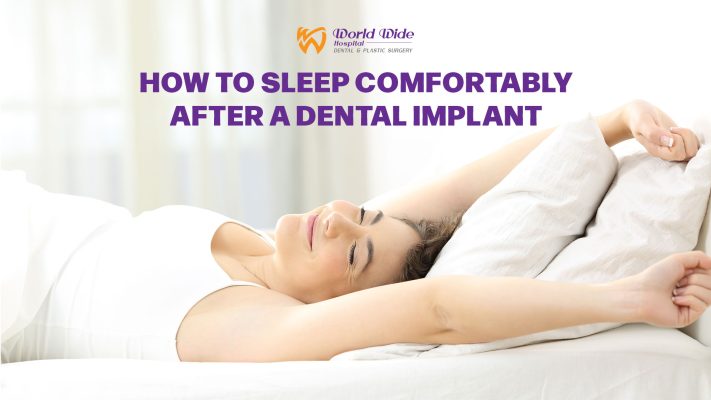
Sleep with Your Head Elevated
Keeping your head elevated is one of the most important recommendations after implant surgery.
Why Elevation Helps
- Reduces swelling
- Minimizes bleeding
- Decreases pressure on the surgical site
How to Do It
- Use two pillows to elevate your head
- Sleep on a recliner for the first 1–2 nights if comfortable
- Keep your head above heart level
Sleep on Your Back
Why Back Sleeping Is Best
- Prevents pressure on the implant site
- Reduces risk of accidental trauma
- Keeps the surgical area stable
Tips
- Place pillows on both sides of your head to prevent rolling
- Use a travel neck pillow for extra support
Avoid Sleeping on the Surgical Side
Sleeping on the side where the implant was placed can:
- Increase swelling
- Cause pain
- Disrupt the blood clot
- Delay healing
If you are a side sleeper, try using body pillows to keep yourself on your back.
HOW TO MANAGE PAIN BEFORE SLEEP
Take Prescribed Medications as Directed
Dentists typically prescribe pain relievers or recommend over-the-counter medications such as ibuprofen.
Best Timing
- Take pain medication 30–60 minutes before bedtime
- Do not wait until pain becomes severe
Avoid Aspirin Unless Approved
Aspirin can increase bleeding and should only be used if recommended by your dentist.
REDUCING SWELLING FOR BETTER SLEEP
Use Cold Compresses
Cold therapy is effective during the first 24–48 hours.
How to Apply
- Apply an ice pack to the outside of your cheek
- 15–20 minutes on, then 15–20 minutes off
- Stop before bedtime to avoid skin irritation
Cold compresses reduce swelling, which helps relieve nighttime discomfort.
Limit Physical Activity Before Bed
Exercise increases blood flow and can worsen swelling or bleeding.
Avoid:
- Late-night workouts
- Heavy lifting
- Sudden movements
WHAT TO EAT AND DRINK BEFORE BED
Choose Soft, Cool Foods
Eating the wrong foods before sleep can irritate the surgical area.
Recommended Options
- Yogurt
- Smoothies (no straws)
- Mashed potatoes
- Soup (lukewarm, not hot)
Avoid Hot, Spicy, or Hard Foods
These can:
- Increase inflammation
- Cause discomfort
- Damage sutures
Stay Hydrated—But Avoid Alcohol
Water supports healing, but alcohol should be avoided for at least 72 hours.
Alcohol:
- Increases bleeding
- Interferes with medication
- Delays tissue repair
ORAL CARE BEFORE SLEEP
Do Not Rinse Vigorously
Strong rinsing can dislodge the blood clot.
Gentle Cleaning Is Essential
- Brush other teeth normally
- Avoid brushing directly on the implant site
- Use prescribed mouth rinse if recommended
Avoid Spitting Forcefully
Let saliva drain naturally to protect the healing area.
COMMON SLEEP-RELATED MISTAKES TO AVOID
Sleeping Flat Too Soon
Lying flat increases swelling and discomfort.
Touching the Implant Area
Avoid checking the site with your tongue or fingers.
Grinding or Clenching
Stress-related grinding can cause pressure on the implant.
If you grind your teeth, inform your dentist for guidance.
HOW LONG SHOULD YOU SLEEP ELEVATED?
First 48–72 Hours
Head elevation is strongly recommended.
After 3–5 Days
Most patients can gradually return to their normal sleeping position—unless advised otherwise.
WHEN NIGHTTIME DISCOMFORT IS NORMAL
Mild discomfort is expected during the first few nights.
Normal symptoms include:
- Mild swelling
- Dull aching pain
- Slight oozing
These typically improve within 3–5 days.
WHEN TO CONTACT YOUR DENTIST
Signs That Require Attention
- Severe pain that does not improve
- Excessive bleeding
- Increasing swelling after day 3
- Fever or foul odor
Worldwide Dental Hospital encourages patients to contact the clinic immediately if symptoms worsen.
SPECIAL CONSIDERATIONS FOR MULTIPLE IMPLANTS
Full-Arch or Multiple Implant Cases
Patients receiving multiple implants or All-on-4 / All-on-6 procedures may need:
- Longer head elevation
- More careful positioning
- Extended medication schedule
Your dentist will provide personalized instructions based on your case.
MENTAL COMFORT AND SLEEP QUALITY
Reduce Anxiety Before Bed
Stress can make pain feel worse.
Helpful techniques:
- Deep breathing
- Calm music
- Guided relaxation
Create a Comfortable Sleep Environment
- Quiet room
- Dim lighting
- Cool temperature
What You Need to Know
Is it safe to sleep after a dental implant?
Yes. Proper sleep actually promotes healing and recovery.
What is the best sleeping position after implant surgery?
Sleeping on your back with your head elevated is safest.
How long should I avoid sleeping on my side?
At least 2–3 days, or until swelling significantly reduces.
Can I sleep without pain medication?
Some patients can, but taking medication before bed often improves comfort.
What if I accidentally sleep on the implant side?
One brief instance is usually not harmful, but try to reposition yourself gently.
CONCLUSION
Sleeping comfortably after a dental implant is an essential part of recovery. Proper positioning, pain management, swelling control, and gentle nighttime routines help protect the surgical site and support successful healing. By following professional advice, most patients experience steady improvement and restful sleep within just a few days.
Worldwide Dental Hospital provides detailed post-operative guidance and ongoing support to ensure every implant patient heals safely and comfortably. With the right care and rest, your new implant can integrate successfully and serve you well for many years.
📞 Contact Worldwide Dental Hospital: (+84) 922.253.888
Schedule your implant consultation or post-surgical follow-up and receive personalized aftercare guidance for a smooth recovery.