
3D CT scans play a crucial role in modern dental implant planning by providing precise, three-dimensional views of bone structure, nerves, and surrounding anatomy. This advanced imaging technology allows dentists to plan implant placement accurately and safely. Understanding how 3D CT scans work helps patients appreciate their importance in achieving predictable, long-lasting implant results. Worldwide Dental Hospital explains how 3D imaging enhances safety and success in implant dentistry.
INTRODUCTION
Dental implants are one of the most advanced and reliable solutions for replacing missing teeth. However, their success depends heavily on precise planning before surgery even begins. Unlike traditional dental procedures, implant placement involves working closely with bone, nerves, and vital anatomical structures beneath the gums.
This is where 3D CT scanning becomes essential. Traditional two-dimensional X-rays provide limited information and may overlook critical details such as bone thickness or nerve position. In contrast, 3D CT scans offer a comprehensive, three-dimensional view of the jaw and surrounding structures, allowing dentists to plan implant treatment with a high level of accuracy.
At Worldwide Dental Hospital, 3D CT scanning is a standard component of implant planning, ensuring that every implant is placed safely, accurately, and with long-term stability in mind.
WHAT IS A 3D CT SCAN IN DENTISTRY?
Understanding CBCT Technology
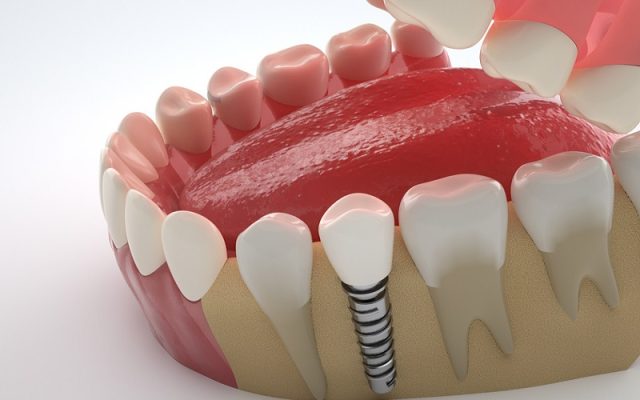
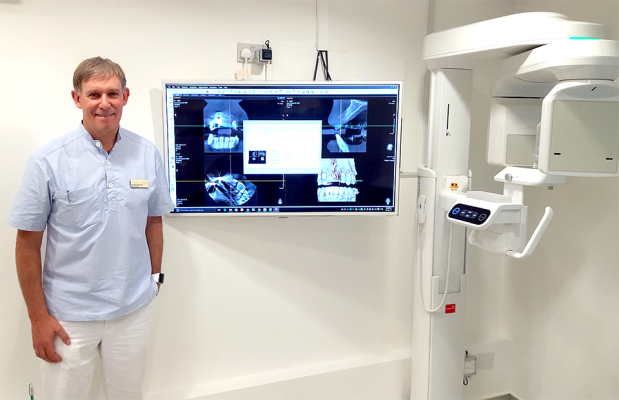
A 3D CT scan in dentistry is commonly performed using Cone Beam Computed Tomography (CBCT). This imaging system captures detailed 3D images of the teeth, jawbone, nerves, sinuses, and surrounding tissues.
How It Works
The scanner rotates around the patient’s head, collecting multiple images that are reconstructed into a three-dimensional digital model. This model can be viewed from any angle for detailed analysis.
Why It’s Different from Traditional X-Rays
Unlike standard X-rays, 3D CT scans provide depth, volume, and spatial relationships that are critical for implant planning.
WHY 3D CT SCANS ARE ESSENTIAL FOR IMPLANT PLANNING
Accurate Bone Assessment
Implants require sufficient bone volume and density for long-term stability. A 3D CT scan allows dentists to measure:
- Bone height
- Bone width
- Bone density
This information determines whether bone grafting is necessary before implant placement.
Precise Nerve and Sinus Mapping
Avoiding Nerve Damage
3D imaging clearly shows the location of major nerves, such as the inferior alveolar nerve, reducing the risk of numbness or nerve injury.
Sinus Evaluation
For upper jaw implants, CT scans reveal sinus position and volume, helping prevent sinus perforation.
ENHANCING SAFETY THROUGH 3D IMAGING
Identifying Hidden Risks
3D CT scans can detect:
- Bone defects
- Cysts or infections
- Anatomical variations
Early identification of these issues allows for safer treatment planning.
Reducing Surgical Complications
By visualizing anatomy in advance, dentists can plan implant placement to minimize trauma and avoid unexpected challenges during surgery.
Worldwide Dental Hospital emphasizes that patient safety begins with comprehensive imaging.
IMPROVING ACCURACY IN IMPLANT POSITIONING
Optimal Implant Angulation
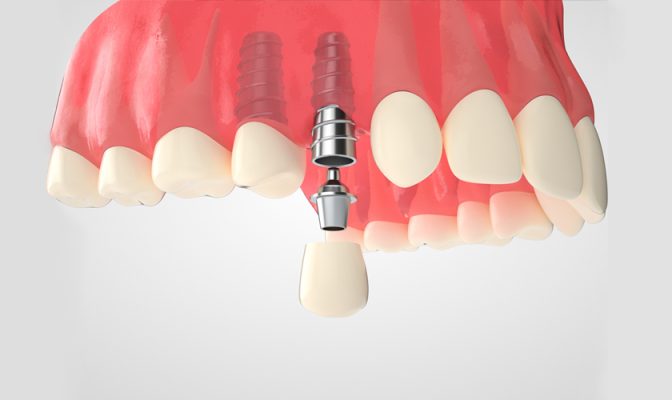
Incorrect implant angle can compromise function and aesthetics. 3D CT scans guide dentists in selecting the ideal angle and depth.
Prosthetic-Driven Planning
Implants are planned based on the final crown position, not just bone availability. 3D imaging supports this restorative-focused approach.
3D CT SCANS AND GUIDED IMPLANT SURGERY
Integration with Digital Planning Software
CT scan data is combined with digital impressions to create a complete virtual model of the mouth.
Surgical Guide Fabrication
Using this data, custom surgical guides are designed to direct implant placement with millimeter-level precision.
Benefits of Guided Surgery
- Shorter surgery time
- Less invasive procedures
- Faster healing
- Greater accuracy
Worldwide Dental Hospital routinely uses guided implant protocols for predictable outcomes.
ROLE OF 3D CT SCANS IN COMPLEX IMPLANT CASES
Multiple Implants
For patients needing multiple implants, 3D imaging ensures proper spacing and alignment.
Full-Arch Implant Solutions
Procedures such as All-on-4 or All-on-6 rely heavily on CT scans to determine implant positions and load distribution.
Patients with Bone Loss
CT scans help plan bone grafting or alternative implant strategies for patients with reduced bone volume.
BENEFITS FOR PATIENTS
More Predictable Outcomes
Patients benefit from higher implant success rates and fewer complications.
Clear Treatment Communication
3D images allow patients to visualize their condition and understand the treatment plan.
Reduced Anxiety
Knowing that treatment is carefully planned using advanced technology increases patient confidence.
RADIATION SAFETY AND 3D CT SCANS
Low Radiation Exposure
Modern CBCT systems use significantly lower radiation doses compared to medical CT scans.
Risk vs. Benefit
The diagnostic value and safety improvements far outweigh the minimal radiation exposure.
Worldwide Dental Hospital follows strict protocols to ensure scans are only taken when clinically necessary.
HOW WORLDWIDE DENTAL HOSPITAL UTILIZES 3D CT TECHNOLOGY
Advanced CBCT Systems
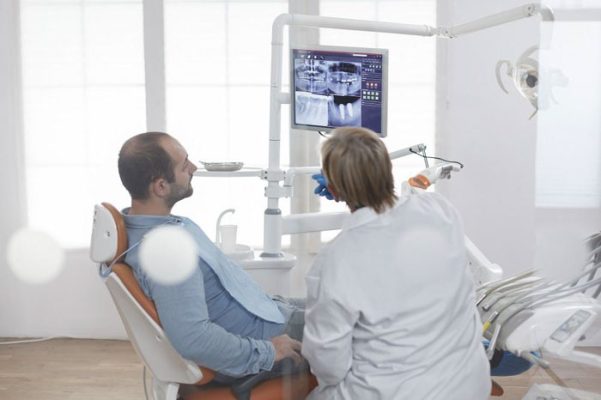
High-resolution scanners provide detailed and clearly interpretable images.
Integration with Digital Workflows
CT data is seamlessly combined with digital scanning and CAD/CAM technology.
Experienced Clinical Interpretation
Skilled clinicians analyze images carefully to design safe and effective implant plans.
Patient-Centered Approach
Imaging is used to enhance safety, transparency, and long-term success.
COMPARING IMPLANT PLANNING WITH AND WITHOUT 3D CT SCANS
| Aspect | With 3D CT Scan | Without 3D CT Scan |
| Bone assessment | Precise and measurable | Limited |
| Nerve visibility | Clearly identified | Often unclear |
| Implant positioning | Highly accurate | Increased risk |
| Surgical safety | High | Variable |
| Long-term success | Predictable | Less predictable |
What You Need to Know
Are 3D CT scans necessary for dental implants?
Yes. They provide critical information for safe and accurate planning.
Do CT scans make implant surgery safer?
Yes. They significantly reduce the risk of nerve and sinus complications.
Is the radiation exposure safe?
Yes. Dental CBCT scans use low radiation doses and follow strict safety standards.
Can implants be placed without a CT scan?
While possible, it carries higher risks and less predictable outcomes.
Why choose Worldwide Dental Hospital for implant planning?
Because advanced imaging and expert planning ensure safe, long-lasting implant results.
CONCLUSION
3D CT scans have become a cornerstone of modern implant dentistry, transforming how implants are planned and placed. By providing detailed three-dimensional views of bone structure and vital anatomy, this technology enhances safety, accuracy, and long-term success.
Worldwide Dental Hospital integrates advanced 3D CT imaging into every stage of implant planning, ensuring each patient receives carefully planned, predictable, and high-quality care. Through the combination of technology and clinical expertise, dental implants can be placed with confidence and precision.

📞 Contact Worldwide Dental Hospital: (+84) 922.253.888
Schedule your implant consultation today and experience safe, technology-driven implant planning with expert care.