
Stress affects more than your mind—it also impacts your gums, teeth, and overall oral health. From grinding and jaw tension to gum inflammation and dry mouth, stress can quietly damage your smile over time. Understanding these effects helps you take early action and prevent long-term complications. Worldwide Dental Hospital provides expert guidance and personalised care to protect your oral health even during stressful periods.
INTRODUCTION
Stress is a normal part of life, but when it becomes chronic, it affects the entire body—including the mouth. Many people are surprised to learn that emotional stress can trigger physical reactions that harm oral health. Jaw clenching, teeth grinding, gum inflammation, and changes in saliva are just a few examples of how stress influences the health of your smile.
Worldwide Dental Hospital emphasises the importance of recognising these signs early. By understanding how stress affects your oral health, you can take steps to protect your teeth and gums while improving overall well-being. This article explains the connection between stress and oral health, the symptoms to watch for, and the treatments that help restore balance.
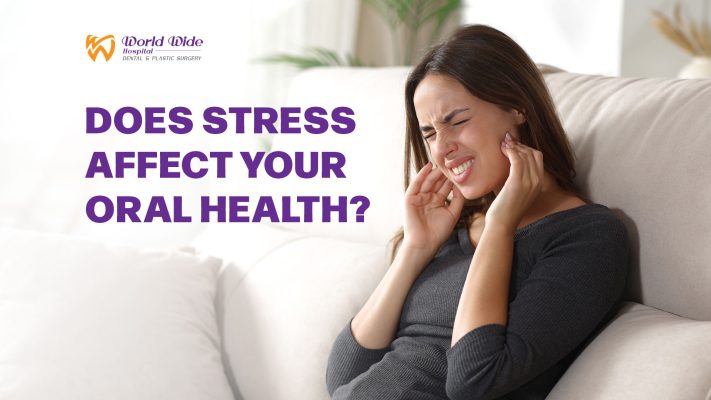
HOW STRESS AFFECTS YOUR ORAL HEALTH
Jaw Clenching and Teeth Grinding (Bruxism)
Stress often causes involuntary clenching or grinding, especially during sleep. Over time, this leads to:
- Worn tooth enamel, increasing sensitivity and cavity risk
- Jaw pain or TMJ disorders, due to muscle overuse
- Headaches, especially in the morning
- Cracked or chipped teeth, requiring restorative treatment
Bruxism is one of the most common stress-related dental issues seen at Worldwide Dental Hospital.
Gum Inflammation and Gum Disease
Stress affects the immune system and makes the body more susceptible to infections—including gum infections. When your immunity weakens, plaque bacteria cause:
- Swollen, tender gums
- Bleeding when brushing or flossing
- Increased risk of gingivitis and periodontitis
Chronic stress also raises cortisol levels, which promotes inflammation and contributes to gum recession.
Dry Mouth (Xerostomia)
Stress reduces saliva production, and dry mouth can lead to:
- Rapid plaque buildup
- Higher risk of cavities
- Difficulty chewing or swallowing
- Bad breath
Saliva is critical for neutralizing acids and protecting tooth enamel. Without it, oral health declines quickly.
Canker Sores (Aphthous Ulcers)
Emotional stress is strongly linked to canker sores. These small ulcers form inside the mouth and can be painful during meals or while speaking.
They typically heal in 7–14 days, but frequent occurrences may indicate elevated stress levels.
Changes in Oral Hygiene Habits
Stress often disrupts daily routines. People under stress may:
- Brush less often
- Skip flossing
- Consume more sugary comfort foods
- Sleep irregularly
These habits combine to increase the risk of cavities and gum disease.
PHYSICAL AND BEHAVIORAL SIGNS THAT STRESS IS AFFECTING YOUR ORAL HEALTH
Morning Headaches or Jaw Pain
A sign of nighttime grinding or clenching.
Tooth Sensitivity
Grinding wears down enamel, exposing the sensitive dentin layer underneath.
Cracked or Flattened Teeth
Visual changes in tooth structure often indicate chronic bruxism.
Receding or Bleeding Gums
Stress-induced inflammation weakens gums and accelerates recession.
Sore Jaw Muscles
Tension builds up when clenching occurs throughout the day or night.
Frequent Mouth Ulcers
Inflammation and weakened immunity increase the likelihood of developing ulcers.

WHY STRESS IMPACTS ORAL HEALTH
Hormonal Changes
Stress increases cortisol, a hormone that triggers inflammation and weakens immunity. When the body is inflamed, gum tissue becomes more vulnerable to bacterial attack.
Weakened Immune System
Stress reduces the body’s ability to fight infection. This allows bacteria to multiply more easily, increasing the risk of gum disease.
Changes in Saliva Production
Stress responses affect the salivary glands, causing reduced saliva flow. Without adequate moisture, bacteria thrive, and enamel becomes more vulnerable.
Muscle Tension
Jaw muscles automatically respond to emotional stress through clenching. This constant pressure affects the teeth, joints, and overall oral stability.
ORAL HEALTH CONDITIONS LINKED TO STRESS
Temporomandibular Joint Disorder (TMJ/TMD)
Stress contributes to muscle tightness and joint strain. Symptoms include:
- Clicking or popping when opening the mouth
- Difficulty chewing
- Facial pain
- Limited jaw movement
TMJ issues require early treatment to prevent long-term discomfort.
Periodontal Disease
Stress accelerates bacterial activity and inflammation. Patients with chronic stress often show rapid gum deterioration, even when brushing regularly.
Enamel Wear
Grinding and acidic saliva (common in stress-induced reflux) weaken enamel.
Sleep-Related Oral Conditions
Stress affects sleep quality, and poor sleep contributes to nighttime grinding and increased cavity risk.
HOW TO MANAGE STRESS-RELATED ORAL HEALTH PROBLEMS
Use a Night Guard (Occlusal Splint)
A night guard protects the teeth from grinding forces. It also relaxes the jaw and prevents enamel wear.
Improve Daily Oral Hygiene
Brushing twice daily and flossing keeps plaque under control even when stress levels are high.
Hydrate Regularly
Water increases saliva flow and protects the mouth from dryness and bacteria.
Use Alcohol-Free Mouthwash
This helps reduce inflammation without drying the mouth.
Learn Stress-Management Techniques
Practices like deep breathing, yoga, meditation, or regular exercise reduce tension and decrease the likelihood of clenching.
Limit Sugar and Acidic Foods
Comfort foods high in sugar accelerate tooth decay when combined with stress-induced dry mouth.
Seek Professional Dental Care
Worldwide Dental Hospital offers:
- Bite assessments
- TMJ evaluations
- Customized night guards
- Gum disease treatments
- Preventive cleanings
Early intervention prevents minor issues from becoming major ones.

What You Need to Know
Does stress really affect oral health?
Yes. Stress influences immunity, saliva flow, muscle tension, and inflammation—directly impacting teeth and gums.
How does stress cause teeth grinding?
Stress activates the jaw muscles unconsciously, especially during sleep, leading to clenching and bruxism.
Why do gums get worse when stressed?
Stress raises cortisol, which increases inflammation and weakens gum tissue, making infections more likely.
Can stress cause dry mouth?
Yes. Stress reduces saliva flow, creating a dry environment where bacteria grow quickly.
How do I protect my teeth during stressful periods?
Use a night guard, practice good hygiene, stay hydrated, and visit the dentist regularly for monitoring.

CONCLUSION
Stress affects far more than your emotional state—it also impacts your oral health in noticeable and hidden ways. Clenching, grinding, gum inflammation, dry mouth, and weakened immunity all contribute to long-term dental problems if not addressed early. By understanding these connections, you can take proactive steps to protect your smile and overall health.
Worldwide Dental Hospital provides personalized care for patients experiencing stress-related oral health issues, offering preventive treatments, TMJ evaluations, and long-term support. Taking care of your mouth is an essential part of taking care of your well-being.
📞 Contact Worldwide Dental Hospital: (+84) 922.253.888
Schedule your dental checkup today and protect your oral health—even during stressful seasons.