
Digital scanning has revolutionized modern dentistry by enhancing accuracy, comfort, and predictability in numerous dental treatments. From crowns and veneers to implants and orthodontics, digital impressions reduce errors associated with traditional methods. Understanding how digital scanning works helps patients appreciate its role in achieving better clinical outcomes. Worldwide Dental Hospital explains how advanced digital scanning enhances precision and treatment success.
INTRODUCTION
Accuracy is one of the most critical factors in successful dental treatment. Even small inaccuracies in impressions or measurements can lead to poorly fitting restorations, bite discomfort, extended treatment time, or the need for repeated adjustments. Traditionally, dentists relied on physical impression materials, which were prone to distortion, patient discomfort, and human error.
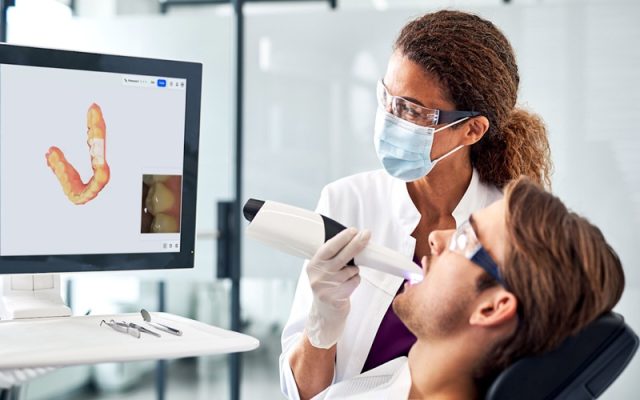
Digital scanning has changed this entirely. Using advanced intraoral scanners, dentists can capture highly precise, real-time 3D images of teeth and gums. These digital impressions provide a foundation for more predictable treatment planning and superior clinical outcomes.
Worldwide Dental Hospital integrates digital scanning into daily practice to improve precision, enhance patient comfort, and ensure long-lasting results across a wide range of dental treatments.
WHAT IS DIGITAL SCANNING IN DENTISTRY?
Definition of Digital Scanning
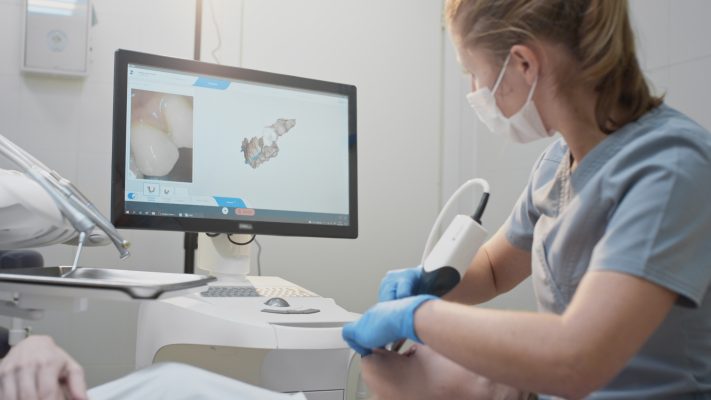
Digital scanning utilizes intraoral scanners to capture detailed 3D images of the oral cavity, eliminating the need for traditional impression trays.
How the Technology Works
A handheld scanner projects light onto teeth and gums, instantly generating a digital model displayed on a screen. This model is then used for diagnosis, treatment planning, and fabrication of dental restorations.
Why It Matters
Digital scanning eliminates common errors associated with physical impressions, such as material shrinkage, tearing, or movement during setting.
LIMITATIONS OF TRADITIONAL DENTAL IMPRESSIONS
Material Distortion
Physical impression materials can warp or shrink, reducing accuracy.
Patient Discomfort
Many patients experience gag reflex or discomfort with impression trays.
Time Consumption
Impressions often need retakes, increasing appointment length.
Manual Errors
Transporting and handling impressions introduces additional risks of inaccuracy.
Digital scanning overcomes these limitations by providing immediate, stable, and precise data.
HOW DIGITAL SCANNING IMPROVES ACCURACY
High-Resolution 3D Imaging
Detailed Surface Capture
Digital scanners record fine details of tooth shape, margins, and gum contours.
Clinical Impact
This precision ensures restorations fit snugly and function properly.
Real-Time Verification
Immediate Feedback
Dentists can review scans instantly and rescan specific areas if needed.
Reduced Errors
Problems are corrected immediately instead of discovered days later.
Consistent and Reproducible Results
Eliminating Variability
Digital scans are consistent and unaffected by environmental factors such as temperature or humidity.
BENEFITS OF DIGITAL SCANNING ACROSS DENTAL TREATMENTS
CROWNS AND VENEERS
Improved Marginal Fit
Accurate digital impressions allow restorations to fit precisely at the gumline.
Enhanced Aesthetics
Precise scanning supports better shape, symmetry, and color matching.
Reduced Adjustments
Well-fitted restorations require fewer modifications after placement.
DENTAL IMPLANTS
Precise Implant Planning
Digital scans integrate with CBCT imaging to plan implant position accurately.
Custom Abutments
Digital data allows fabrication of abutments tailored to individual anatomy.
Long-Term Stability
Accurate alignment reduces stress on implants and surrounding bone.
ORTHODONTICS AND ALIGNER TREATMENT
Accurate Tooth Movement Simulation
Digital scans enable precise prediction of tooth movement in aligner therapy.
Better Aligner Fit
Well-fitting aligners improve comfort and treatment efficiency.
Fewer Refinements
Improved accuracy reduces the need for additional aligner sets.
FULL-MOUTH REHABILITATION
Comprehensive Digital Planning
Digital scans allow dentists to analyze bite relationships and jaw alignment.
Predictable Outcomes
Accurate data ensures restorations work harmoniously together.
IMPROVED PATIENT EXPERIENCE THROUGH DIGITAL SCANNING
Comfort and Convenience
No bulky trays or unpleasant materials.
Shorter Appointments
Faster scanning reduces chair time.
Clear Communication
Patients can visualize their dental condition and treatment plan on screen.
DIGITAL SCANNING AND LAB COMMUNICATION
Seamless Data Transfer
Digital files are sent instantly to dental laboratories without physical shipping.
Enhanced Collaboration
Dentists and technicians work from the same accurate data.
Faster Turnaround
Restorations are fabricated more efficiently.
REDUCING RETAKES AND REMAKES
Why Accuracy Saves Time and Cost
Poor impressions lead to remakes, delays, and additional appointments.
Digital scanning significantly reduces the likelihood of retakes, benefiting both patients and clinicians.
DIGITAL SCANNING AND LONG-TERM TREATMENT SUCCESS
Better Fit Means Better Longevity
Accurate restorations place less stress on teeth and gums.
Reduced Complications
Proper alignment reduces inflammation, wear, and restoration failure.
HOW WORLDWIDE DENTAL HOSPITAL UTILIZES DIGITAL SCANNING
Advanced Intraoral Scanners
Worldwide Dental Hospital uses high-resolution scanners for precise data capture.
Integration with Digital Workflows
Scans are combined with CBCT imaging, CAD/CAM design, and guided surgery.
Clinician Training
Dentists receive ongoing training to maximize scanning accuracy.
Patient-Centered Approach
Technology is used to enhance comfort, transparency, and outcomes.
COMPARISON: DIGITAL SCANNING VS. TRADITIONAL IMPRESSIONS
| Aspect | Digital Scanning | Traditional Impressions |
| Accuracy | Very high | Variable |
| Patient comfort | Excellent | Often uncomfortable |
| Retake rate | Low | Higher |
| Data transfer | Instant | Physical shipping |
| Visualization | Real-time | Limited |
What You Need to Know
Is digital scanning more accurate than traditional impressions?
Yes. Digital scanning captures precise, distortion-free 3D data.
Is digital scanning safe?
Yes. It is non-invasive and radiation-free.
Does digital scanning reduce treatment time?
Often yes, due to fewer retakes and faster lab processing.
Can digital scanning be used for all treatments?
It is suitable for most restorative, implant, and orthodontic procedures.
Why choose a clinic with digital scanning technology?
Because accuracy directly affects comfort, aesthetics, and long-term success.
CONCLUSION
Digital scanning has become a cornerstone of modern dentistry, significantly improving accuracy across diagnostics, treatment planning, and restoration fabrication. By eliminating many sources of error associated with traditional impressions, digital scanning enhances precision, comfort, and predictability.
Worldwide Dental Hospital integrates advanced digital scanning technology into comprehensive treatment workflows, ensuring that every crown, veneer, implant, or orthodontic plan is built on precise data. This commitment to accuracy helps deliver durable, comfortable, and aesthetically pleasing results for patients from around the world.
📞 Contact Worldwide Dental Hospital: (+84) 922.253.888
Schedule a consultation today to experience accurate, technology-driven dental care powered by advanced digital scanning.