
Gum disease can start silently and progress quickly. Learn the early signs of periodontal disease, why it develops, and how Worldwide Dental Hospital in Ho Chi Minh City helps protect your smile with expert periodontal care.
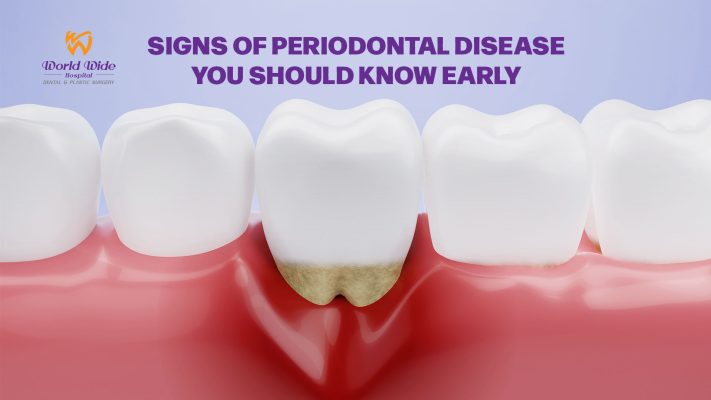
UNDERSTANDING PERIODONTAL DISEASE
Periodontal disease, commonly known as gum disease, is a bacterial infection that affects the tissues supporting your teeth — the gums, periodontal ligament, and bone.
It usually starts as gingivitis, a mild inflammation of the gums, and can progress into periodontitis if left untreated.
At this stage, the infection begins destroying the bone and connective tissue, eventually leading to tooth loss.
At Worldwide Dental Hospital, our specialists use digital diagnostics, laser therapy, and deep cleaning technology to detect and treat periodontal disease early — before irreversible damage occurs.
[nướu sưng, viêm nha chu]
WHY EARLY DETECTION MATTERS
Gum disease is often painless in its early stages, which is why many people don’t realize they have it.
By the time pain or mobility appears, bone loss may already have begun.
Early diagnosis means easier treatment, faster recovery, and the ability to save your natural teeth.
MAIN CAUSES OF PERIODONTAL DISEASE
Several factors contribute to the onset of gum disease:
1. Poor Oral Hygiene
Not brushing or flossing properly allows plaque to build up, leading to bacterial infection.
2. Smoking or Vaping
Tobacco reduces blood flow to the gums, slowing healing and increasing infection risk.
3. Hormonal Changes
Pregnancy, menopause, or puberty can make gums more sensitive to plaque buildup.
4. Medical Conditions
Diseases like diabetes or immune disorders can increase susceptibility to gum infections.
5. Stress and Poor Nutrition
These weaken your immune system, reducing the body’s ability to fight bacteria.
6. Genetic Predisposition
Some people are more prone to periodontal disease due to inherited gum sensitivity.

EARLY SIGNS OF PERIODONTAL DISEASE YOU SHOULD KNOW
Recognizing the warning signs early can save your teeth and gums.
1. Bleeding Gums
If your gums bleed while brushing or flossing, it’s not normal.
Bleeding indicates inflammation caused by bacterial buildup — an early sign of gingivitis.
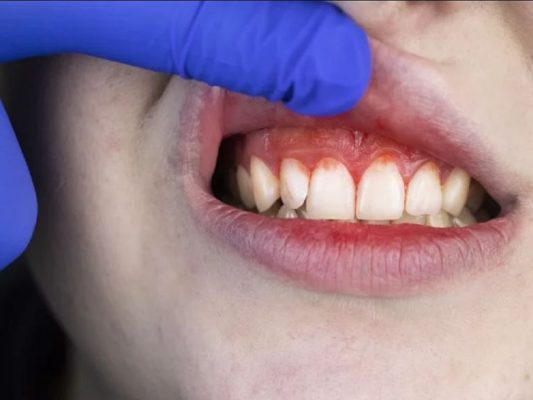
2. Swollen or Red Gums
Healthy gums are firm and pink. Swelling, redness, or tenderness means infection may be developing under the surface.
3. Persistent Bad Breath (Halitosis)
Chronic bad breath can be caused by bacteria producing sulfur compounds in gum pockets.
4. Gum Recession
Gums that are pulling away from the teeth can expose roots, making teeth look longer and more sensitive.
5. Tooth Sensitivity
Exposed roots and receding gums often cause sharp pain when eating hot, cold, or sweet foods.
6. Loose or Shifting Teeth
As gum and bone tissues deteriorate, teeth may start moving or feeling loose.
7. Pus Between Gums and Teeth
Pus indicates an active infection — a clear sign of advanced periodontitis that requires immediate treatment.
8. Changes in Bite or Tooth Alignment
If your teeth feel different when you bite down, the supporting bone may already be affected.
STAGES OF PERIODONTAL DISEASE
Understanding the progression helps you act before serious damage occurs.
| Stage | Description | Symptoms |
| 1. Gingivitis | Inflammation is limited to the gums. | Red, bleeding gums, but no bone loss. |
| 2. Early Periodontitis | Infection spreads below the gumline. | Mild bone loss and gum pockets begin forming. |
| 3. Moderate Periodontitis | Deeper infection and tissue loss. | Gum recession, bad breath, and tooth mobility. |
| 4. Advanced Periodontitis | Severe bone destruction. | Loose teeth, pus, and possible tooth loss. |
HOW PERIODONTAL DISEASE IS DIAGNOSED
At Worldwide Dental Hospital, diagnosis involves advanced imaging and digital measurement for precise evaluation.
Step 1: Visual Examination
Dentists check for gum color, swelling, bleeding, and plaque deposits.
Step 2: Pocket Depth Measurement
A periodontal probe measures the space between gums and teeth.
Healthy gums measure 1–3 mm; pockets deeper than 4 mm suggest disease.
Step 3: Digital X-rays or CBCT Scan
Used to detect bone loss and hidden infections beneath the gumline.
Step 4: Bacterial Testing (if necessary)
In complex cases, microbial tests identify the bacteria responsible for infection.
TREATMENT OPTIONS FOR PERIODONTAL DISEASE
The good news: periodontal disease can be managed effectively — especially when treated early.
1. Professional Scaling and Root Planing
Deep cleaning removes tartar and bacteria from above and below the gumline.
Performed under local anesthesia for comfort.
2. Laser Therapy
Advanced lasers kill bacteria and stimulate tissue regeneration with minimal discomfort.
3. Antibiotic Therapy
Targeted antibiotics or mouth rinses may be prescribed to control infection.
4. Periodontal Surgery
In advanced cases, flap surgery or bone grafting may be necessary to restore lost tissue.
5. Maintenance and Follow-Up
Regular checkups every 3–6 months help prevent relapse.
At Worldwide Dental Hospital, all periodontal treatments follow international protocols, combining precision, comfort, and long-term protection.
COST OF PERIODONTAL TREATMENT IN VIETNAM
| Treatment Type | Average Cost (USD) | Description |
| Scaling & Polishing | 25 – 50 | Basic cleaning to prevent gum disease. |
| Deep Cleaning (Root Planing) | 60 – 120 | For mild to moderate periodontitis. |
| Laser Therapy | 100 – 200 | Advanced, non-invasive gum treatment. |
| Gum Surgery | 300 – 800 | For severe bone loss or infection. |
At Worldwide Dental Hospital, prices start from 40 USD, depending on the condition and required treatment.
In comparison, similar treatments in Australia or the U.S. cost 500–1,500 USD.
HOW TO PREVENT PERIODONTAL DISEASE
Do’s
- Brush twice a day with fluoride toothpaste.
- Floss daily to remove plaque between teeth.
- Use antibacterial mouthwash.
- Visit your dentist every 6 months for cleaning and checkups.
- Eat a balanced diet and avoid smoking.
Don’ts
- Don’t ignore bleeding gums.
- Avoid excessive sugar and acidic drinks.
- Don’t skip professional cleanings — home care isn’t enough to remove tartar.

WHY EXPATS TRUST WORLDWIDE DENTAL HOSPITAL
1. Expertise in Periodontal Care
Our specialists are trained in advanced gum therapy, laser treatment, and bone regeneration.
2. International-Standard Technology
3D imaging, ultrasonic scaling, and laser systems ensure precision and comfort.
3. Gentle and Painless Procedures
Local anesthesia and modern tools make every treatment stress-free.
4. English-Speaking Specialists
Clear communication for international patients.
5. Affordable, Transparent Pricing
High-quality care at 70% less than Western costs.
FAQ – PERIODONTAL DISEASE
Can gum disease be reversed?
Yes — early-stage gingivitis is reversible with proper cleaning and care.
Is gum disease contagious?
Yes, bacteria can spread through saliva, but maintaining hygiene prevents transmission.
Does scaling hurt?
No. With ultrasonic and laser tools, scaling is comfortable and quick.
Can I keep my teeth after treatment?
Absolutely. With timely intervention and maintenance, natural teeth can last for life.
How often should I have gum checkups?
Every 6 months, or every 3 months if you have a gum disease history.
CONCLUSION
Recognizing the early signs of periodontal disease — bleeding gums, bad breath, or gum recession — is the key to preventing serious oral health problems.
At Worldwide Dental Hospital, advanced diagnostics and gentle laser treatments help patients restore gum health safely and effectively.
Don’t wait for pain to appear — early detection and treatment mean stronger teeth, healthier gums, and a brighter smile.
📞 Contact Worldwide Dental Hospital: (+84) 922.253.888