
Wearing braces for the first time? Learn which foods to avoid after getting braces, what to eat instead, and how Worldwide Dental Hospital helps you adapt comfortably during your orthodontic journey in Vietnam.
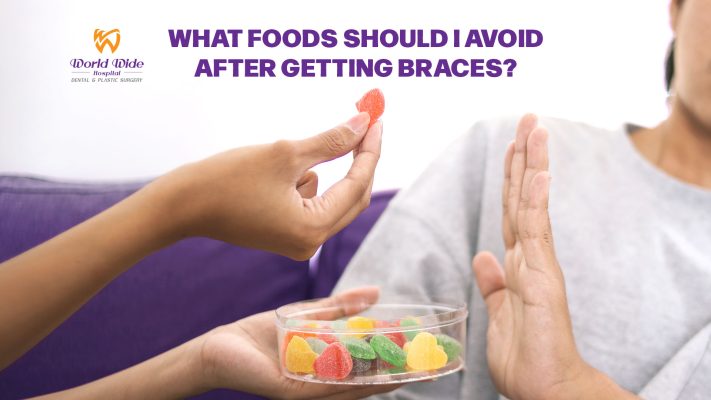
STARTING YOUR BRACES JOURNEY
Getting braces is an exciting step toward a straighter, more confident smile — but it also means making a few adjustments to your daily habits, especially your diet.
During the first few weeks, your teeth and gums may feel a bit sore or sensitive. Choosing the right foods helps you stay comfortable and protect your braces from damage.
At Worldwide Dental Hospital, orthodontists guide every patient through a smooth and safe transition — including personalized advice on what to eat (and what not to eat) after braces are placed.
WHY YOU NEED TO AVOID CERTAIN FOODS
Braces are strong, but sticky, hard, or chewy foods can still damage their brackets and wires.
When this happens, it may cause discomfort, delay your treatment, or require extra visits to the dentist.
Common Risks Include:
- Broken brackets or bent wires – caused by hard or crunchy food.
- Food stuck between braces – leading to plaque buildup and cavities.
- Gum inflammation – from sugary or sticky residues.
- Extended treatment time – if adjustments are needed frequently.
Knowing what to avoid can help you protect your investment and achieve the best results faster.

FOODS TO AVOID AFTER GETTING BRACES
Let’s break it down into categories so it’s easier to remember.
1. Hard Foods
Hard foods can loosen or break brackets and wires.
Avoid:
- Nuts (almonds, peanuts, cashews)
- Hard candies
- Ice cubes
- Crusty bread or baguettes
- Hard cookies or crackers
- Popcorn kernels
Tip: If you love crunchy snacks, try cutting fruits like apples or carrots into thin slices — or steam them to soften.
2. Sticky or Chewy Foods
Sticky foods can cling to braces and are difficult to clean, which increases the risk of cavities and gum problems.
Avoid:
- Chewing gum
- Caramel, toffee, or taffy
- Gummy candies or jelly sweets
- Sticky rice or mochi
- Dried fruits (raisins, dates)
Alternative: Go for soft fruits like bananas, mangoes, or yogurt-based desserts instead.
3. Crunchy Snacks
These can easily snap wires or dislodge brackets when bitten directly.
Avoid:
- Chips, nachos, and pretzels
- Fried snacks
- Corn on the cob (cut kernels off before eating)
- Pizza crusts
Tip: If you crave a crunch, baked potato slices or soft rice crackers are safer choices.
4. Sugary Foods and Drinks
Sugar feeds harmful bacteria that cause plaque and white spots around brackets.
Avoid:
- Soda, energy drinks, or sweet tea
- Chocolate bars
- Sugary cereals
- Pastries and cakes
Better options: Choose water, milk, or unsweetened juice — and brush your teeth right after meals.
5. Tough Meats
Chewy meats can strain braces and make cleaning difficult.
Avoid:
- Steak or beef jerky
- Hard chicken wings
- Grilled ribs or pork chops
Alternative: Opt for tender proteins like minced chicken, soft fish, tofu, or stewed beef
SAFE AND COMFORTABLE FOODS AFTER BRACES
During your first week with braces, it’s best to eat soft, easy-to-chew foods while your mouth adjusts.
Soft Food Ideas
- Mashed potatoes or sweet potatoes
- Pasta, noodles, or rice
- Soups and stews
- Scrambled eggs
- Smoothies and yogurt
- Porridge or oatmeal
- Soft fruits (bananas, papayas, avocados)
Nutritional Tip
Ensure your diet continues to include sufficient protein, vitamins, and calcium for healthy teeth and gums.
At Worldwide Dental Hospital, your orthodontist can recommend braces-friendly meal plans that are both nutritious and easy to follow.

CLEANING YOUR BRACES AFTER EATING
Even with careful food choices, food particles can still get trapped between braces.
Proper cleaning is crucial for avoiding plaque buildup and tooth decay.
Step-by-Step Care:
- Rinse with water to remove loose food.
- Brush gently with a soft-bristled toothbrush and fluoride toothpaste.
- Use an interdental brush to clean around brackets and wires.
- Floss daily with orthodontic floss threaders or water flossers.
- Rinse with mouthwash to keep your gums fresh and clean.
Worldwide Dental Hospital also provides orthodontic cleaning kits designed to make oral care easier during treatment.
COMMON QUESTIONS FROM PATIENTS
1. Can I eat rice or noodles with braces?
Yes. Soft rice, noodles, and pasta are excellent options that won’t damage your brackets.
2. When can I eat normally again?
Most patients can resume their usual diet after 1–2 weeks, as soreness fades.
3. Can I drink coffee or tea?
Yes, but drink in moderation. Brush or rinse after to avoid staining your brackets.
4. What should I do if something gets stuck?
Use an interdental brush or rinse with warm water. If you feel discomfort, contact your dentist for help.
5. Can I chew gum with braces?
No — chewing gum can pull wires or loosen brackets, delaying your progress.
HOW WORLDWIDE DENTAL HOSPITAL SUPPORTS YOU THROUGHOUT BRACE TREATMENT
1. Personalized Orthodontic Plans
Each patient receives a customized braces plan — whether traditional, Damon self-ligating, or Invisalign aligners.
2. Gentle and Painless Adjustments
Regular checkups are performed with precision and comfort in mind.
3. Dietary and Care Guidance
Orthodontists provide a comprehensive list of dos and don’ts so you can adjust your eating habits safely.
4. Emergency Assistance
If you ever experience broken wires or loose brackets, the hospital offers prompt repair services.
5. International Expertise
With English-speaking dentists and international-standard technology, Worldwide Dental Hospital is a trusted orthodontic destination for expats and travelers.
COST OF ORTHODONTIC CARE IN VIETNAM
| Type of Braces | Average Cost (USD) | Description |
| Metal Braces | 1,200 – 1,800 | Durable and effective. |
| Damon Self-Ligating Braces | 2,000 – 2,800 | Less friction, faster treatment. |
| Ceramic Braces | 2,000 – 2,500 | Tooth-colored, more aesthetic. |
| Invisalign Clear Aligners | 3,500 – 5,500 | Nearly invisible, comfortable, removable. |
At Worldwide Dental Hospital, prices are transparent and inclusive of consultation, X-rays, and adjustments.
WHY CHOOSE WORLDWIDE DENTAL HOSPITAL
- 30+ years of orthodontic expertise in Vietnam.
- Internationally certified, English-speaking orthodontists.
- Advanced systems: Damon, Invisalign, and 3D digital imaging.
- Personalized patient support throughout treatment.
- Central location in Ho Chi Minh City, convenient for expats and tourists.
CONCLUSION
Avoiding certain foods after getting braces isn’t just about comfort — it’s about protecting your treatment and ensuring your smile transforms beautifully and efficiently.
At Worldwide Dental Hospital, every orthodontic journey is guided by care, comfort, and precision.
From the first day of braces to the final reveal of your new smile, the team ensures you eat safely, clean effectively, and smile confidently.
📞 Contact Worldwide Dental Hospital: (+84) 922.253.888