
Why do dentists recommend removing wisdom teeth? Learn the real reasons behind extraction, the dangers of keeping impacted wisdom teeth, and how Worldwide Dental Hospital in Vietnam provides safe, gentle, and modern surgical care for expats and travelers.
UNDERSTANDING WHAT WISDOM TEETH ARE
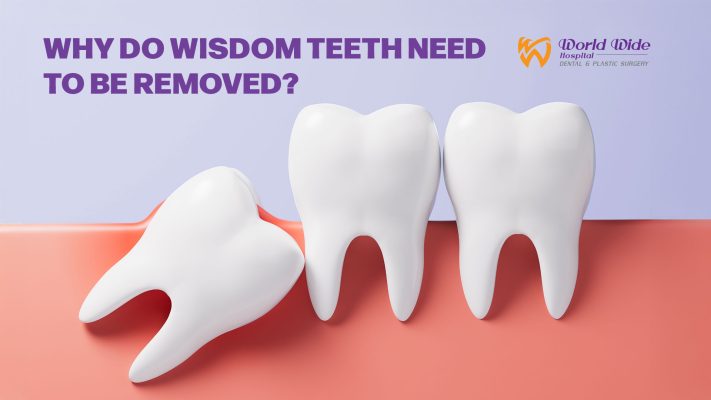
Wisdom teeth, also known as third molars, are the last set of teeth to develop—typically appearing between the ages of 17 and 25. Unlike other teeth, wisdom teeth often do not have enough room to erupt properly because our jaws have gotten smaller over generations due to changes in diet and evolution.
As a result, many wisdom teeth grow at an angle, become stuck under the gums, or push against the neighboring teeth. When this happens, the tooth is called impacted, and extraction becomes necessary to protect your oral health.
At Worldwide Dental Hospital, dentists frequently treat international patients with impacted wisdom teeth requiring safe and comfortable removal using modern technology.
WHY WISDOM TEETH OFTEN NEED TO BE REMOVED
1. WISDOM TEETH OFTEN DO NOT HAVE ENOUGH SPACE TO ERUPT
Most people simply do not have enough jaw space to accommodate four additional molars. When the jaw cannot provide a proper path for these teeth to emerge, they become trapped under the gums or grow sideways. This creates pressure that can lead to pain, shifting of other teeth, and chronic irritation in the area.
Lack of space is the most common reason dentists advise removing wisdom teeth early—before they cause long-term damage.
2. IMPACTED TEETH CAN CAUSE INFECTION
When a wisdom tooth only partially erupts, it creates an opening where food debris, plaque, and bacteria easily accumulate. Because this area is difficult to reach with a toothbrush or floss, it often leads to infection known as pericoronitis.
This infection may cause:
- Pain or throbbing in the back of the jaw
- Swollen or bleeding gums
- Difficulty opening the mouth
- Bad breath or unpleasant taste
- Fever or swollen lymph nodes
These infections tend to recur unless the impacted tooth is removed. Worldwide Dental Hospital often sees international patients experiencing repeated infections due to partially erupted wisdom teeth.
3. WISDOM TEETH CAN DAMAGE NEARBY TEETH
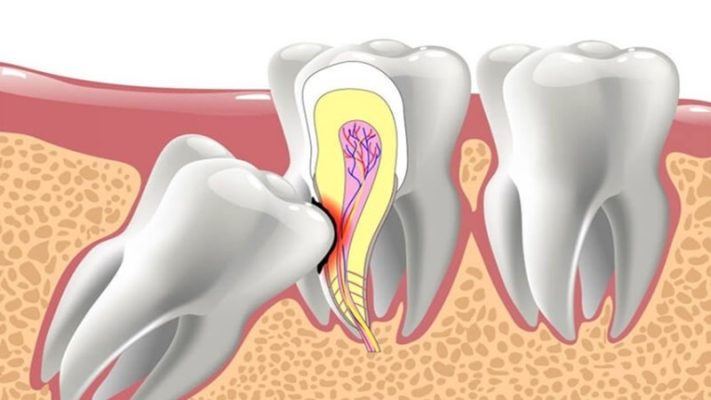
When a wisdom tooth grows at an angle (mesial impaction), it presses against the second molar. Over time, this pressure can cause:
- Cavities between the two teeth
- Loss of bone between the molars
- Root resorption (the second molar’s root dissolves)
- Weakening of the surrounding tooth structure
Once damage occurs, both teeth may require complex treatment such as root canal therapy or crowns. Removing wisdom teeth early prevents this chain reaction of problems.
4. THEY CAN LEAD TO CYSTS OR TUMORS
An impacted wisdom tooth sits inside a sac of tissue within the jawbone. Occasionally, this sac fills with fluid and forms a cyst, which can expand and destroy surrounding bone. In rare cases, more serious benign tumors can form.
Removing the wisdom tooth removes the sac, preventing future bone loss and maintaining the health of the jaw. Worldwide Dental Hospital uses CT Cone Beam imaging to detect cysts early and plan safe surgical removal.
5. HARD-TO-CLEAN WISDOM TEETH INCREASE DECAY RISK
Even if wisdom teeth erupt completely, they are located far back in the mouth, making them difficult to clean properly. Their deep grooves trap bacteria easily. As a result, wisdom teeth are more likely to develop cavities, and treating cavities in this area is difficult.
Leaving them increases the risk of pain, infection, and prolonged decay. For this reason, many dentists recommend extraction before complications arise.
6. THEY CAN CAUSE CROWDING OR SHIFTING OF OTHER TEETH
Some patients notice their teeth becoming more crowded over time, especially in the lower front teeth. Although not the only cause, erupting wisdom teeth contribute to crowding by placing pressure on the dental arch.
This is especially problematic for people who have completed orthodontic treatment. Removing wisdom teeth protects the results of braces or Invisalign aligners, ensuring the teeth remain aligned.
7. THEY MAY CAUSE CHRONIC PAIN AND JAW DISCOMFORT
Impacted wisdom teeth often cause ongoing symptoms such as:
- Persistent dull aches
- Headaches
- Jaw stiffness
- Pain when chewing
These symptoms sometimes come and go, causing uncertainty for patients. Extracting the problematic wisdom tooth usually resolves these chronic issues permanently.
8. PREVENTIVE REMOVAL IS SAFER AND EASIER THAN LATE SURGERY
Removing wisdom teeth early—typically in the late teens or early twenties—offers several advantages:
- The roots are not fully developed yet
- The surrounding bone is softer
- Healing is faster
- There is a lower risk of nerve complications
- Surgery is less invasive
Waiting until wisdom teeth cause major symptoms often leads to longer recovery and more complex surgical procedures.

WHAT HAPPENS IF YOU DO NOT REMOVE PROBLEMATIC WISDOM TEETH?
If wisdom teeth are left untreated when they clearly need removal, several issues may develop:
Chronic infection
Recurring pericoronitis can become painful and spread to other parts of the mouth.
Damage to neighboring teeth
Decay, bone loss, and gum disease may develop around the second molar.
Difficulty eating
Pain or swelling may make chewing uncomfortable, limiting your diet.
Increased surgical difficulty
As roots grow deeper and more curved, the surgery becomes more complex and recovery longer.
Possibility of nerve involvement
Lower wisdom teeth may eventually grow too close to the inferior alveolar nerve. Removing them earlier reduces the risk of temporary or permanent numbness.
These risks explain why dentists recommend proactive, not reactive, removal.
HOW WORLDWIDE DENTAL HOSPITAL PERFORMS SAFE, COMFORTABLE WISDOM TOOTH REMOVAL
International patients choose Worldwide Dental Hospital for wisdom tooth extraction because of its advanced equipment, English-speaking team, and gentle surgical approach.
Modern CBCT 3D imaging
Allows doctors to visualize the exact position of roots, nerves, and bone structure for precise surgical planning.
Minimally invasive surgical techniques
Reduce tissue trauma, minimize swelling, and shorten healing time.
Piezotome bone-surgery technology
Ultrasonic tools cut bone gently, protecting nerves and surrounding tissues.
Laser-assisted disinfection
Reduces bacteria, promotes better healing, and lowers the risk of postoperative infection.
English-speaking oral surgeons
Ensure clear communication for every step of the procedure.
Hospital-grade sterilization
Worldwide Dental Hospital meets strict European sterilization standards, giving international patients confidence in safety.
WHAT TO EXPECT DURING THE EXTRACTION PROCESS
Step 1: Consultation
The dentist performs an oral exam, reviews X-rays or CT scans, and explains the surgical plan in detail.
Step 2: Local anesthesia or sedation
Patients may choose between local numbing, sedation, or IV anesthesia depending on comfort level.
Step 3: Removal
The oral surgeon removes the tooth using a minimally invasive method designed to protect the gums and bone.
Step 4: Cleaning and stitching
The surgical site is cleaned thoroughly, often with laser assistance, and stitches are placed if needed.
Step 5: Postoperative instructions
Clear guidelines are provided to reduce swelling, prevent dry socket, and promote fast healing.
RECOVERY AFTER WISDOM TOOTH REMOVAL
Most patients experience mild swelling and tenderness for two to three days. At Worldwide Dental Hospital, surgeons use techniques that minimize discomfort and speed recovery.
Recommended care includes:
- Cold compresses for the first 24 hours
- Soft foods for several days
- Avoiding straws and smoking
- Gentle mouth rinsing after 24 hours
- Taking prescribed medication as directed
Healing typically completes within 1–2 weeks.

WHY CHOOSE WORLDWIDE DENTAL HOSPITAL FOR WISDOM TOOTH REMOVAL?
International patients trust Worldwide Dental Hospital because of:
✔️ Highly trained oral surgeons
✔️ Modern digital imaging and minimally invasive techniques
✔️ Gentle approach to pain management
✔️ Full English communication
✔️ Strict hospital-grade sterilization
✔️ Central District 1 location
✔️ Comfortable recovery experience for expats and travelers
Wisdom tooth extraction is one of the most common procedures performed at Worldwide Dental Hospital.
CONCLUSION
Wisdom teeth often need to be removed because they lack space, cause infection, damage nearby teeth, and lead to long-term oral complications. Removing them early protects your oral health and prevents unnecessary pain, decay, or jaw problems later in life.
With advanced imaging, gentle surgical techniques, and a fully English-speaking team, Worldwide Dental Hospital provides safe, comfortable, and predictable wisdom tooth removal for international patients in Vietnam.
📞 Contact Worldwide Dental Hospital: (+84) 922.253.888
Your comfort and safety come first—trust Worldwide for expert wisdom tooth care.