
Still feeling sensitivity after a root canal? Learn why healing takes time, what sensations are normal, when you should be concerned, and how Worldwide Dental Hospital provides safe, gentle, and modern endodontic care for international patients in Vietnam.
WHY SENSITIVITY AFTER A ROOT CANAL HAPPENS
A root canal removes the infected nerve inside your tooth, but it does not instantly heal the surrounding tissues. Many patients expect the discomfort to disappear immediately after treatment, so it can be surprising when the tooth still feels tender. In reality, the ligaments, bone, and gums around the tooth are still active, living structures — and they take time to recover from inflammation and irritation.
At Worldwide Dental Hospital, dentists often reassure patients that mild sensitivity after a root canal is not only common but also completely normal. The inside of the tooth may be cleaned and sealed, but the supporting tissues still need days or weeks to settle, especially if the tooth had been infected for a long time before treatment.
HOW LONG POST–ROOT CANAL SENSITIVITY NORMALLY LASTS
The healing timeline varies depending on how severe the infection was and how the tooth was restored afterward. Most patients feel noticeable improvement after a few days, though some may still experience light pressure sensitivity for one to two weeks. If the tooth had swelling, a large abscess, or complicated canal anatomy, the recovery phase can naturally take longer.
What matters most is the pattern: the discomfort should gradually decrease over time. Sensitivity that slowly improves is a positive sign of healing. However, if pain intensifies, spreads, or lasts beyond three to four weeks, that is when you should return for an evaluation.

INFLAMMATION AROUND THE ROOT IS STILL HEALING
Even after the infected pulp is removed, the tissues surrounding the tooth — especially the periodontal ligament and the bone — may remain irritated. If you had a significant infection, this irritation can be substantial. The bacteria that caused the problem may have inflamed the tissue at the root tip for weeks or months before treatment.
When the dentist removes the nerve and cleans the canals, the internal issue is solved, but the external tissue must heal naturally. This healing often produces a “bruise-like” tenderness when chewing, touching, or tapping the tooth. The sensation fades as the inflammation resolves. This is the most common and most normal cause of post–root canal sensitivity.
THE TOOTH EXPERIENCED MINOR TRAUMA DURING CLEANING
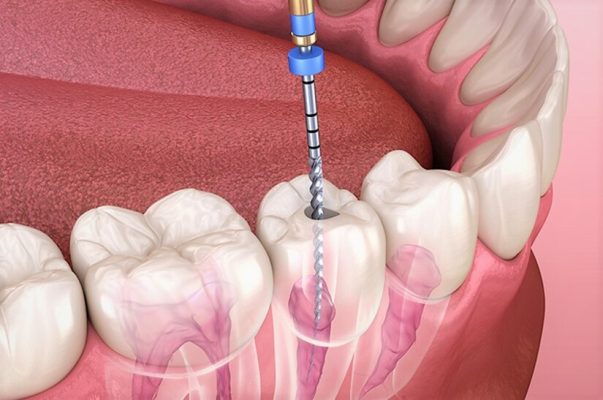
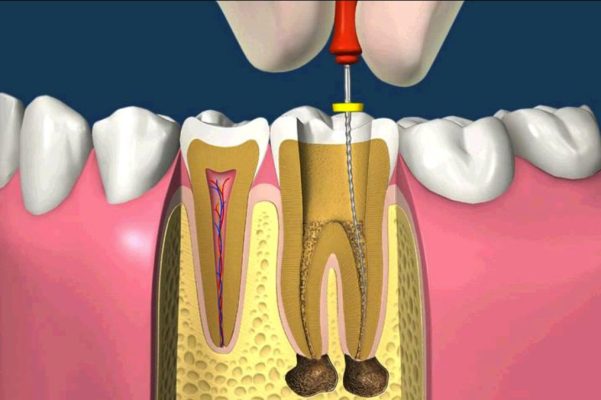
Root canal treatment requires precise instruments that clean the inside of each canal. Even with gentle rotary systems, the surrounding ligament can be temporarily irritated by the movement of the instruments. This does not mean the procedure was done incorrectly; it is simply a natural response from a delicate area being treated.
Patients sometimes describe this sensation as a mild, dull ache when biting down. It is temporary and typically improves once the ligament recovers.
YOUR BITE MAY BE SLIGHTLY HIGH
After a root canal, the tooth is restored using a filling or crown. If the bite is even slightly too high, the treated tooth receives more pressure than the surrounding teeth. Because the ligament is already sensitive from the infection and treatment, this uneven pressure can make the tooth feel sore.
This type of sensitivity is easy to identify because it usually occurs only when chewing or closing the mouth. A bite adjustment is simple and provides immediate relief. Worldwide Dental Hospital always checks bite alignment, but occasionally, the bite can shift slightly as swelling reduces — so an adjustment may be needed later.
YOUR ROOT CANAL HAD A COMPLEX ANATOMY
Every tooth is different. Some have narrow canals, while others have multiple tiny branches or unusual curves. When the anatomy is complicated, the tooth may take longer to heal simply because cleaning and disinfection require more manipulation.
Even if the treatment was fully successful, the recovery period may last longer, especially for molars with three or four canals. Healing is slower, not because the root canal failed, but because the tissue experienced more irritation during treatment.
THERE MAY BE A CRACK OR STRUCTURAL WEAKNESS
Some teeth have small cracks that do not reveal themselves until after a root canal. Before treatment, the pain may have been caused by infection, so the crack was not obvious. After the infection is removed, the crack becomes the new source of sensitivity.
This often appears as sharp pain when chewing certain foods or pain that comes and goes unpredictably. A porcelain crown is usually required to stabilize the tooth and prevent the crack from spreading. Worldwide can fabricate quickly using CAD/CAM technology, allowing the tooth to be protected almost immediately.
GUMS AROUND THE TOOTH MAY BE IRRITATED
Sometimes the issue is not the tooth at all, but the gum tissue surrounding it. If the gums were inflamed from infection, or if food particles became trapped afterward, this can create soreness. The rubber dam clamp used during treatment or cleaning solutions may also temporarily irritate the gum margin.
Gum-related sensitivity usually improves after thorough cleaning or gentle rinsing. Worldwide dentists check both the tooth and the surrounding gum to determine which one is the real source of discomfort.
WHEN POST–ROOT CANAL SENSITIVITY IS NORMAL — AND WHEN IT IS NOT
Normal sensitivity:
- Improves a little every day
- Feels like pressure or mild bruising
- Appears mostly when chewing
- No swelling, fever, or throbbing
These signs indicate healthy healing.
Abnormal or concerning sensitivity:
- Pain worsens over time
- Face or gum swelling appears
- Pain wakes you up at night
- Bad taste or discharge comes from the tooth
- Sensitivity lasts beyond one month
These symptoms may indicate reinfection, a high bite, or a structural problem. You should return for an evaluation.
Worldwide always schedules follow-up checks to make sure the healing is progressing normally.
HOW WORLDWIDE DENTAL HOSPITAL ENSURES COMFORTABLE HEALING
Worldwide Dental Hospital uses advanced equipment to reduce sensitivity and accelerate healing.
Modern rotary endodontics
Creates smoother internal walls, reduces friction, and minimizes ligament irritation.
3D CBCT imaging
Allows dentists to see all canals clearly, reducing the chance of missed anatomy.
Microscope-assisted cleaning
Ensures even small, hidden areas are properly disinfected.
Laser disinfection
Fotona laser helps kill deep bacteria, reduce inflammation, and speed healing.
High-quality porcelain crowns
Protect the weakened tooth after treatment, preventing future pain or cracks.
HOW TO RELIEVE POST–ROOT CANAL SENSITIVITY AT HOME
You can support healing by:
- Chewing on the opposite side for a few days
- Using warm saltwater rinses to soothe gums
- Taking anti-inflammatory medication if advised
- Avoiding hard, sticky, or crunchy foods
- Brushing gently around the treated area
- Following all dentist aftercare instructions
Most patients feel much better within days when following these steps.
WHY EXPATS CHOOSE WORLDWIDE DENTAL HOSPITAL FOR ROOT CANAL CARE
Worldwide is known among international patients for:
- English-speaking dentists trained in advanced endodontics
- Gentle, pain-free anesthesia techniques
- Modern diagnostic tools
- Clear communication and follow-up support
- Hospital-grade sterilization
- A convenient location near District 1
- Rapid, precise crown fabrication
Patients receive complete care, from diagnosis to final restoration, with a focus on long-term comfort and safety.

CONCLUSION
Feeling sensitivity after a root canal can be unsettling, but in most cases, it is a natural part of healing. The tissues around the tooth need time to recover from infection and irritation. As long as the discomfort gradually improves, it is a sign of healthy healing. Persistent or worsening pain, however, deserves attention.
At Worldwide Dental Hospital, advanced technology and experienced dentists ensure accurate diagnosis, gentle treatment, and careful follow-up — giving every patient the safest, most comfortable recovery possible.
📞 Contact Worldwide Dental Hospital: (+84) 922.253.888
Your comfort and confidence matter every step of the way.